Noora
An AI social conversation coach for people on the autism spectrum, built with Stanford researchers for real practice that aims to transfer offline.
For some people on the autism spectrum, knowing how to respond when someone shares good news or hard news is not automatic. That gap can strain school, work, and friendship. Face-to-face coaching helps, but it is scarce and expensive.
Noora is a Stanford research project that turns structured social conversation practice into short AI trials people can run on their own time. I engineered on the trial codebase (noora-v1): badges, progress, session summary, and leaner model calls. I also built Noora 2, a side exploration of modules and expression intensity. The public site is heynoora.com. Trial access ran through noora.stanford.edu. Demos below are reconstructions, not the live coach.
The practice loop
Empathy practice is a tight loop: a leading statement, a sentiment rating (positive, neutral, negative), an empathic reply, then feedback. Statements come from a curated bank so the coach never invents an unsafe prompt. The demo is frozen: you compare a strong reply with a weak one instead of calling a live model.
Leading statement
“I'm feeling really tired lately and it's been so hard to concentrate.”
First, sense the emotion. Then reply in a way that shows you heard them.
Why it exists
Earlier clinical work showed that structured practice can improve empathic statements and questions for adults with ASD. Noora asks whether careful AI practice can deliver more of those reps without dropping the clinical bar. The research goal is transfer: gains should show up with a real person, not only inside the app.
Research and trial
Led with Dr. Lynn Koegel and collaborators across Stanford (including OVAL), with support from Stanford HAI and the Kind World Foundation. In a four-week randomized trial, daily empathy trials improved in-app replies for most active users and raised scores vs control on a human Zoom conversation afterward.
heynoora.com is the clean public landing. noora.stanford.edu hosted clinical trial access. noora-v1 is the main codebase used in those trials. This page does not touch participant data.
Progress and badges
On noora-v1 I built badge and progress surfaces: categories, unlock logic, summary messaging, module color, and a Hall of Fame style view. Progress is a map of skills and habits (showing up, reading sentiment, stringing strong replies), not empty points.
Hall of Fame
Progress you can see
A portfolio-side sketch of the badge work: categories, unlock state, and a quiet record of practice.
Progress
First session
Complete your first practice block.
Noora 2 exploration
Noora 2 is my side exploration of what comes next: a wider module menu and facial expressions that scale with emotional intensity. Not the trial deployment. A probe into coaching that is more than text.
Noora 2 exploration
Face, feeling, and intensity
A side exploration of how Noora could grow: modules beyond empathy, and hyper-realistic expressions that scale with emotional intensity.
Empathy scenario with a clear happy expression.
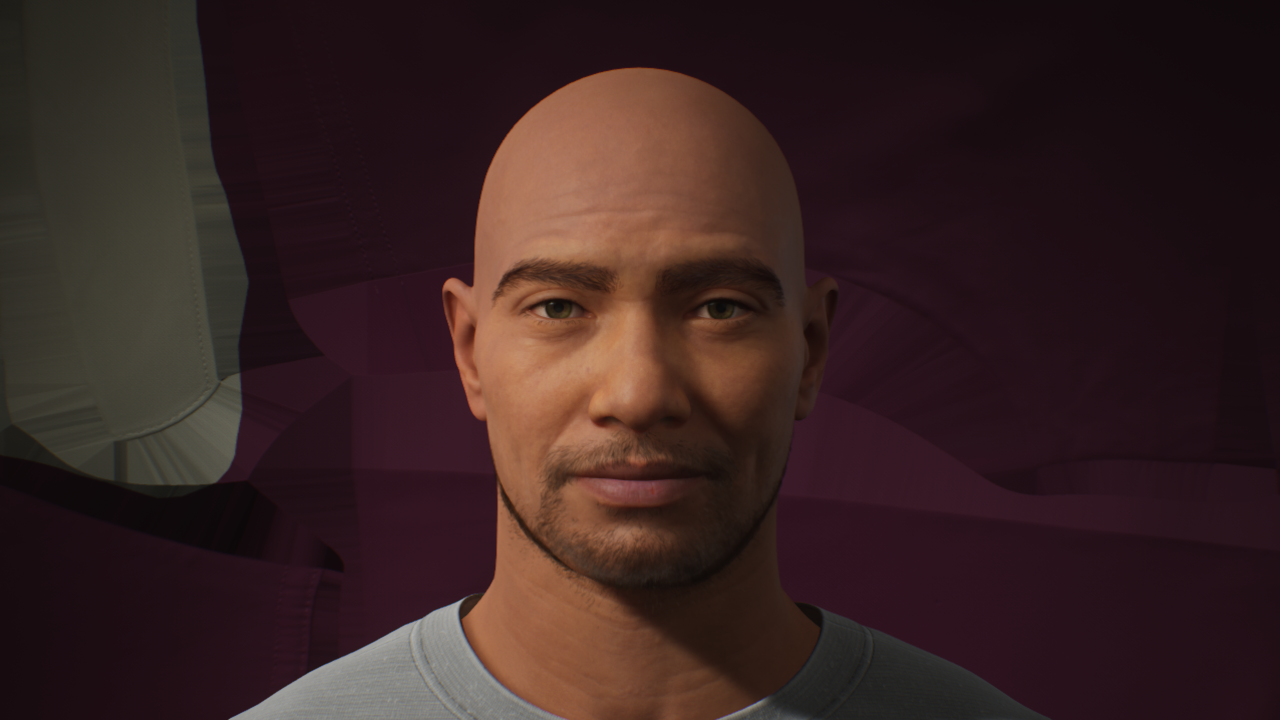
Sample frames from the Noora 2 exploration. Not clinical trial content.
How it's built
Trial stack: Next.js, OpenAI, Azure speech, curated prompt and statement banks. My work: badges, summary UX, consolidated rating and feedback calls. Noora 2: Flask, emotion and intensity face maps, broader modules.
- Next.js
- OpenAI
- Azure Speech
- Research UX